


Dilapidation Reports
Evidence of condition before someone starts building next door.
A dilapidation report records the condition of a property before nearby work starts. If a dispute follows about who caused a crack, the report is the evidence.
The same document is sometimes called a dilapidation survey, a condition survey or a pre-works inspection. The names move around. What matters is that somebody independent wrote down and photographed the state of the building on a known date, before anything happened to it.
When you need one
Construction, excavation, demolition and piling all transmit movement through the ground. A neighbouring building can pick up cracking, subsidence or damage to driveways and paths, and the argument that follows tends to come down to whether the damage was there beforehand.
Without a report, that argument is unwinnable in both directions. The party doing the work cannot prove it did not cause the damage. The neighbour cannot prove it did.
Bodies corporate are on the receiving end of this more often than most. A tower goes up next door, and eighteen months later the committee is looking at cracking in a common property wall with no record of what the wall looked like before.
Not every job next door warrants one. The activities that generate the claims are the ones that move ground or shake it: deep excavation, piling, rock breaking, dewatering, demolition, and heavy vehicle movements over a shared or adjoining driveway. Vibration travels further through some soils than people expect, and the damage often shows up at a distance from the site rather than on the boundary.
There is a second trigger that catches people out. Development approvals frequently carry a condition requiring the applicant to obtain dilapidation reports on adjoining properties before work begins, and to lodge them. If that condition is attached to your approval, the report is not optional and the timing is not flexible. Check the conditions of consent rather than assuming.
Who commissions one
Four groups ask for these reports, for different reasons.
- Builders, developers and civil contractors, protecting themselves against claims from neighbours once excavation or piling begins
- Bodies corporate and strata committees, protecting common property when a site next door is about to be developed
- Strata managers, arranging the report on behalf of a scheme they act for
- Individual owners whose house, driveway or boundary structure sits alongside the works
The interests are opposed, which is the point. A report that both sides can rely on has to be written by someone with nothing riding on the outcome.
What the report contains
- A documented inspection of the property before work begins
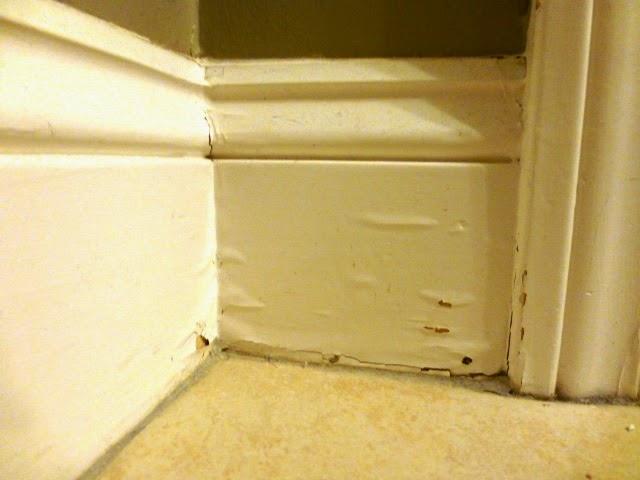
- Photographic record of existing cracking, movement and surface damage
- Written description of the condition of relevant structures, tied to the photographs
- The date of inspection and the areas covered, so the scope of the baseline is unambiguous
- A comparison inspection after works finish, where that has been commissioned
The value is in the specificity. A report that says the building was “generally in good condition” settles nothing. One that photographs and measures an existing crack settles a great deal.
Before and after
Dilapidation work is usually done in two passes. The pre-works inspection establishes the baseline. The post-works inspection identifies what changed. Committees sometimes commission only the first and then find they have a baseline with nothing to compare it against.
If adjacent works are already finished and no pre-works report exists, an inspection can still document current condition, though it will not carry the same evidentiary weight.
How to tell a thorough report from a thin one
Dilapidation reports are easy to produce badly, and the difference only becomes visible at the point where somebody needs to rely on one. By then it is too late to improve it.
A report that will hold up has dated photographs that can be tied to a specific location on the building, not a gallery of general shots. Existing defects are described in terms somebody can measure against later, with crack widths and extents recorded rather than adjectives. The areas inspected are listed, and so are the areas that were not inspected and why, because an unstated gap in coverage is where arguments start.
Look at what happens with the parts nobody enjoys documenting. Basement walls, retaining structures, driveway slabs, pool surrounds and boundary fencing are where movement tends to show first in strata schemes, and they are also the parts a rushed inspection skips. If those are missing from the baseline, the report covers the easy half of the problem.
What it costs, and what drives the price
There is no standard figure, because no two jobs cover the same thing. The variables that actually move the cost are worth knowing before you ask anyone for a quote.
- How much building is in scope. A single townhouse and a forty lot complex with basement parking, a pool surround and three driveways are not comparable jobs
- How much existing damage there is. A building already carrying cracking takes far longer to document properly than one that does not
- One pass or two. Pre-works only, or pre and post
- Access. Roofs, basements, locked plant rooms and occupied lots all add time
- Location. Travel to a regional site is a real cost on a small job
Set against a damage claim, the report is almost always the cheaper of the two. That is the comparison to make, rather than comparing one quote to another on price alone. A thin report costs less and proves less.
Dilapidation reports across Queensland and northern New South Wales
We work from the Gold Coast and inspect across Queensland, including Brisbane, Cairns, Townsville and the Whitsundays, and south into New South Wales as far as Port Macquarie.
Brisbane and the Gold Coast generate most of this work, simply because that is where the infill development is. A site gets knocked down, something taller goes up, and the schemes on either side have a reason to want the condition of their common property on the record first.
The northern New South Wales corridor runs on a different statutory vocabulary to Queensland, and owners corporations there often find the terminology in a Queensland report does not match what their own scheme documents call things. The inspection work is the same either side of the border. The language used to describe who owns what is not.
Why use a quantity surveyor
Seymour Consultants has worked in construction and development for over 25 years, and our quantity surveyors are members of the Australian Institute of Quantity Surveyors. Assessing building condition and understanding what construction activity does to neighbouring structures is core to that discipline.
We prepare these reports for bodies corporate, strata committees, strata managers and property owners across Queensland and northern New South Wales.
Frequently asked questions
Who pays for a dilapidation report?
Commonly the party carrying out the works, since they carry the risk of a damage claim. A body corporate can also commission its own report to protect the scheme’s position, and sometimes both parties do.
How soon before works should the inspection happen?
As close to the start as practical. A baseline captured months earlier leaves a window where damage could have occurred from something unrelated.
Is a dilapidation report the same as a dilapidation survey?
In ordinary use, yes. The survey is the inspection and the report is the document that comes out of it, but most people use the two words interchangeably and mean the same piece of work.
Is this the same as a building condition report?
No. A building condition report assesses the state of a building for the owner’s own purposes. A dilapidation report exists to establish a record for a specific external event, usually adjacent construction. We prepare both.
Do you cover the common property only, or individual lots?
Both are possible. Scope is agreed before the inspection, and for a body corporate it usually centres on common property, with lots adjoining the works included where the committee wants them covered. Tell us what sits closest to the site and we will scope around it.
What happens if damage appears after the works?
The post-works inspection is compared against the baseline, photograph by photograph, and the differences are what the claim rests on. This is why the pre-works record has to be detailed. An undated or vague baseline gives the other side room to argue the damage predates the job.
To arrange a dilapidation report, call 07 5573 4011 or email info@seymourconsultants.com.au.
